A daily ritual of power
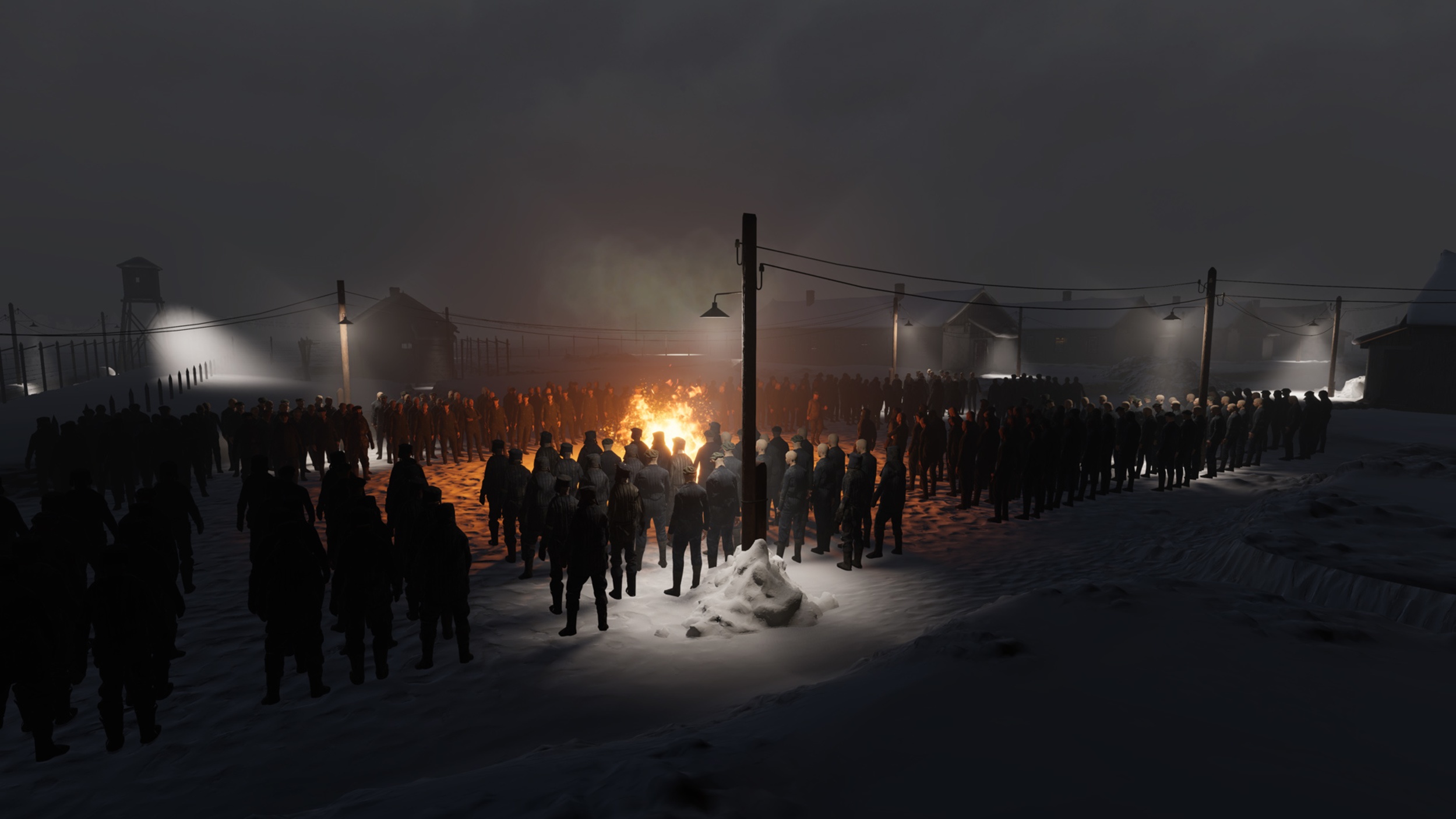
Every day in the camp follows the same rhythm: wake-up, roll call, departure for work. Prisoners step out from the freezing barracks into even deeper cold. Anyone who’s late gets hit—not by a guard, but by a trusty (a criminal inmate appointed to keep order).
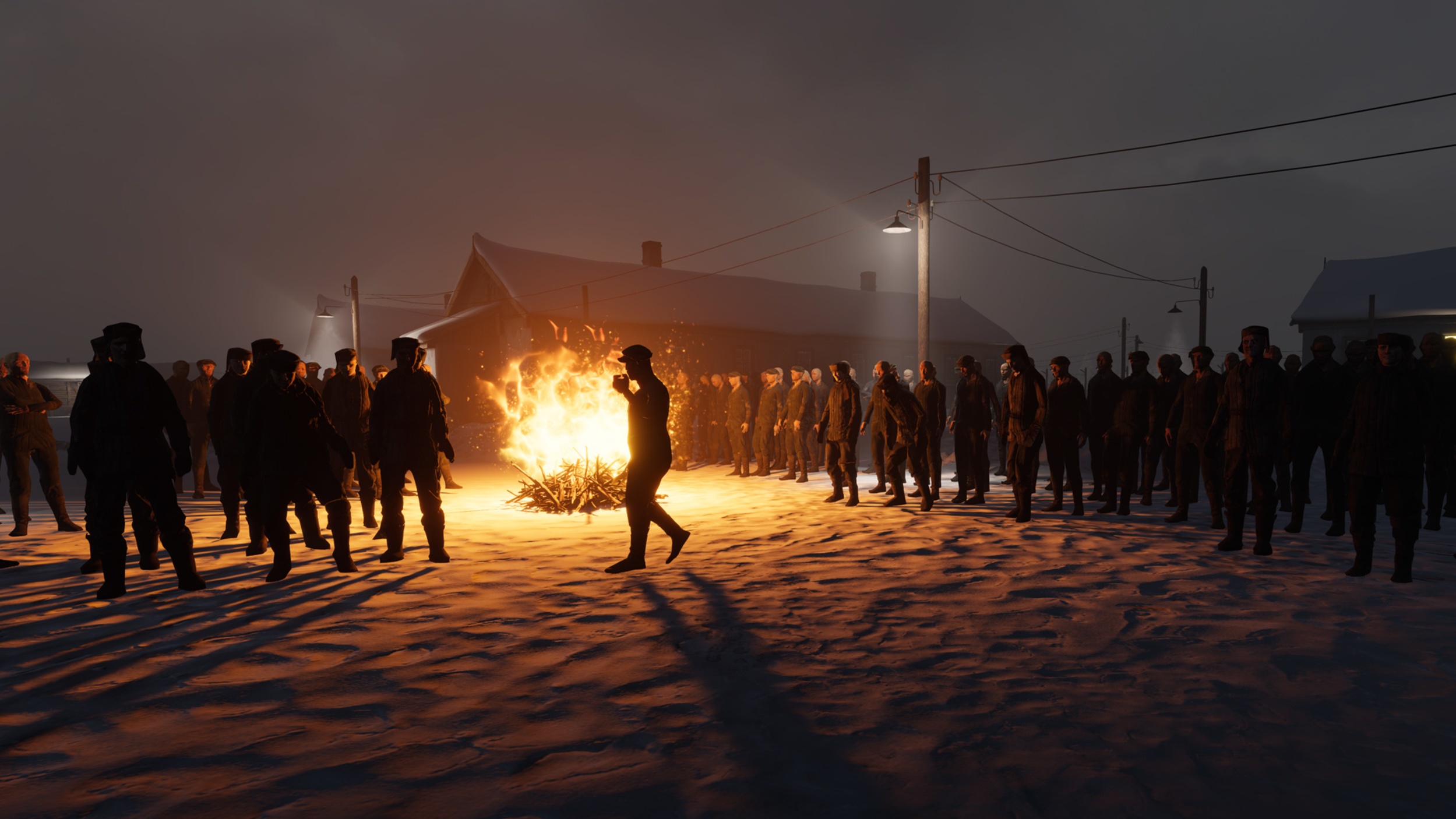
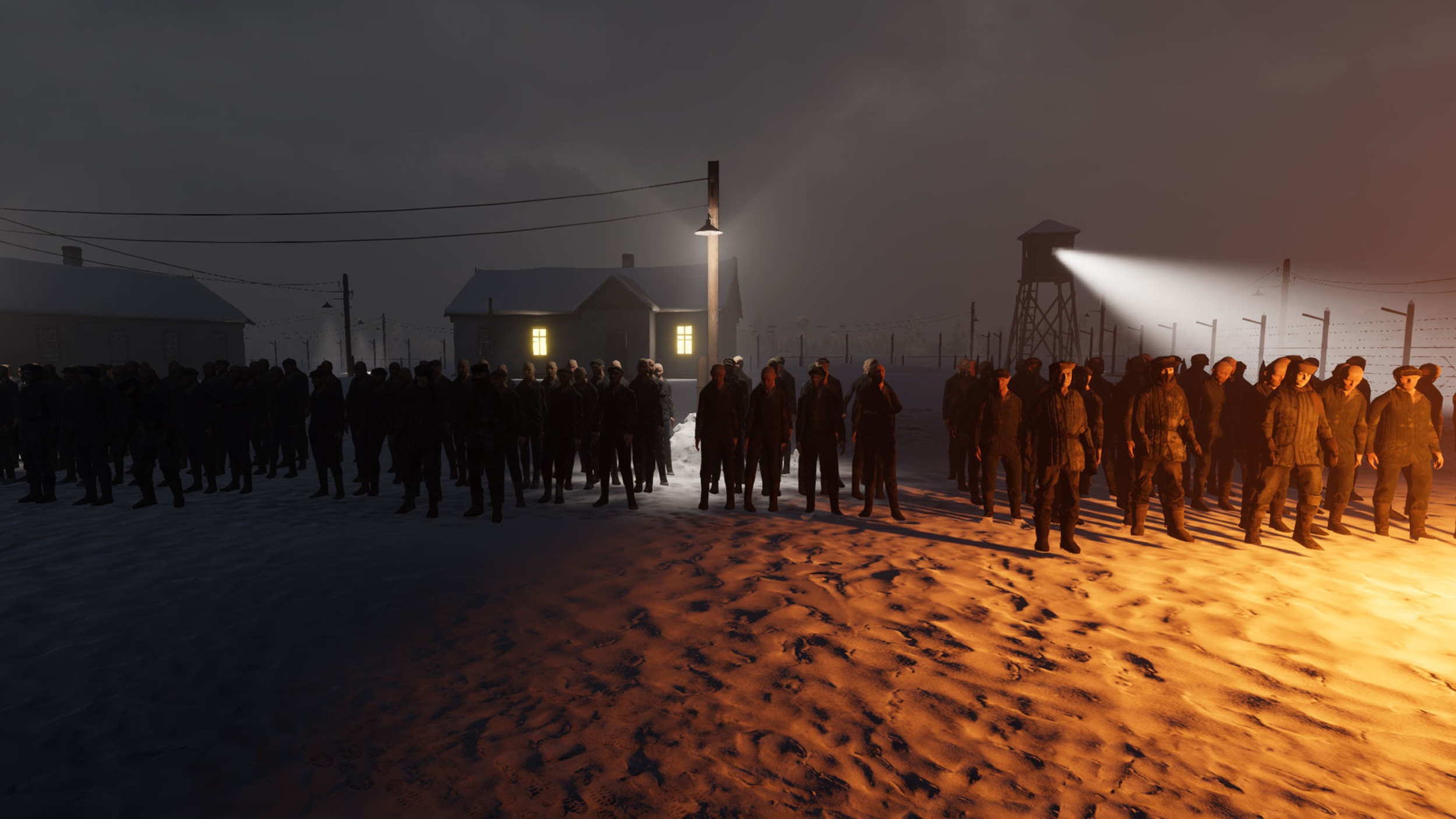
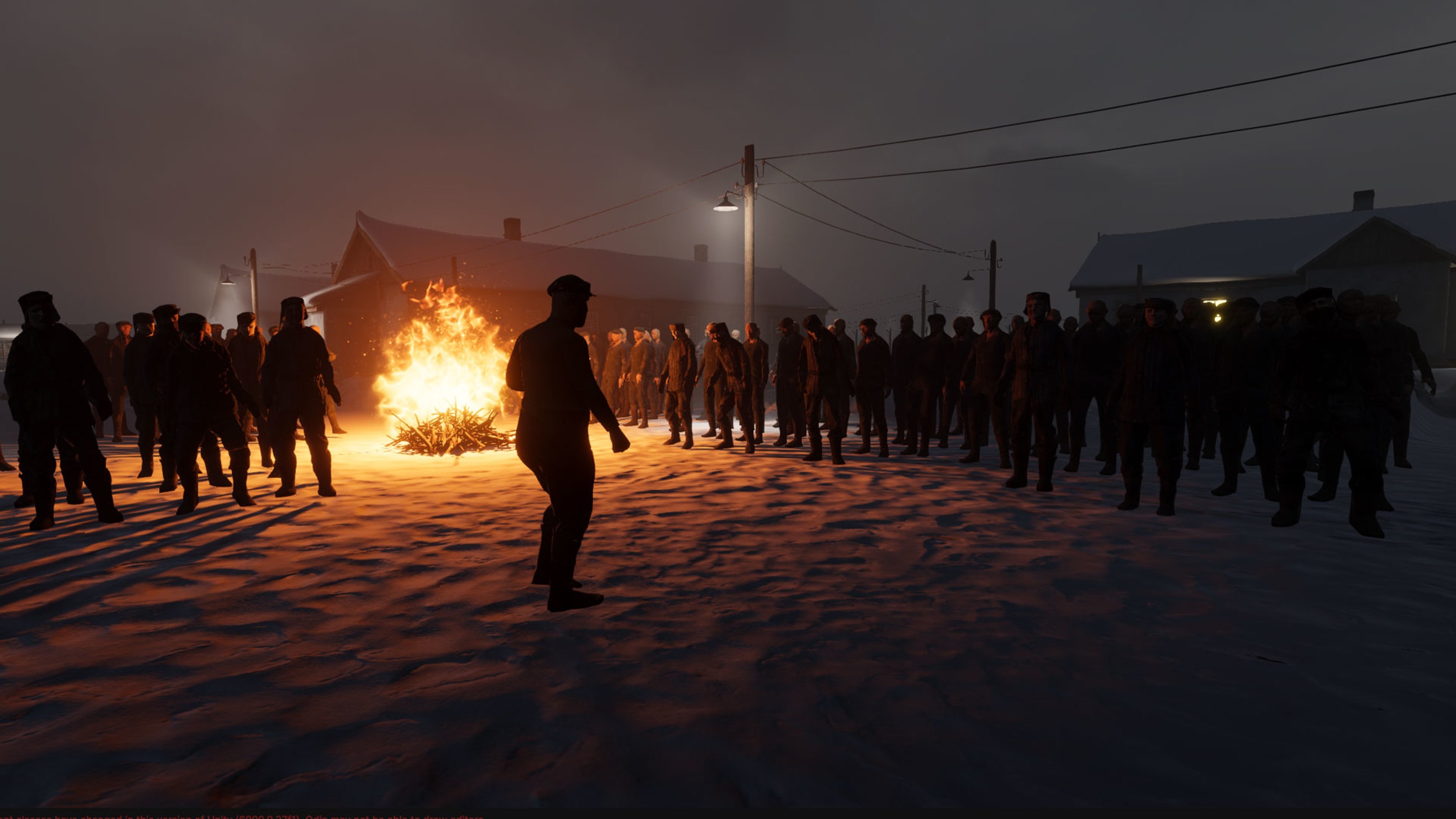
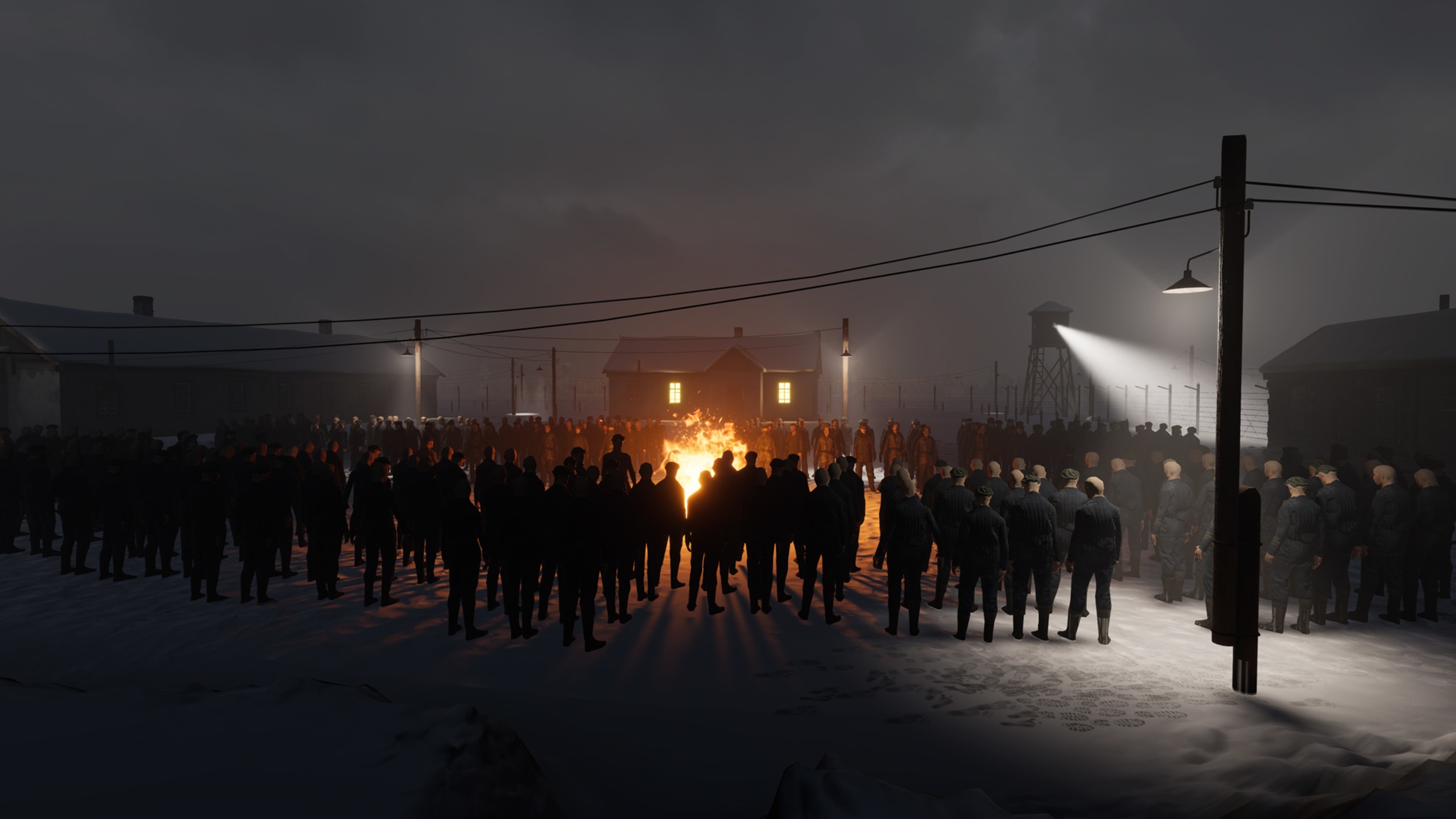
Inmates line up and obediently await the count and the camp’s “morning prayer.” Any misstep is punished. One of the kapos walks along the brigades, counting prisoners—each one must kneel once counted. Everyone knows where they’re supposed to stand. Or they don’t—and it shows. Brigades are assembled, numbers are called, faces are blank, teeth chatter. Roll call separates night from day, hope from another shift of forced labour.
Scene Objectives
- Follow orders
- The player must arrive at the roll call area near the gate and line up with their brigade
- Being late results in a beating by the trusty—until the player joins their assigned formation
- The count begins, during which the player is forced to kneel (headset position is tracked)
- Fellow inmates react negatively to mistakes in formation
Message
The main aim of the scene is to portray the daily enforcement of obedience and routine humiliation. The player starts out alone in the barracks and arrives late for roll call. They’re reprimanded and must respond—the system reacts dynamically to the player’s movements.
This scene explores peer pressure, conformity, and discipline. In gulags, control wasn’t only exercised by guards—it was internalized within inmate brigades. The player experiences firsthand what it means to disobey an order.
Using headset tracking, the simulation detects whether the player kneels when required. Any unauthorized movement results in punishment. The scene tests social conformity. If the player fails to kneel or stand in formation, others respond with threats and verbal aggression until the correct action is taken.
Historical Context
The barracks the player leaves is nearly empty—only a sleeping kapo remains. He doesn’t have to work. The rest of the prisoners are already outside. The mess from the night before is gone—everyone is dressed and ready.
From the roll call area, the player gets a full view of the camp—barracks, dining hall, solitary confinement, washroom. It gives a sense of scale. The player also sees the diversity of the prisoner population—pakany (the criminal elite), but also minors and elderly inmates. Many prisoners are maimed or crippled. The sun hasn’t risen yet—we are north of the Arctic Circle, and daylight is brief.
The camp is enclosed by barbed wire fences, with two additional layers of fencing and guard towers in every corner, each equipped with floodlights. The only exit is the main gate, guarded at all times.
Roll call ends with the camp’s “prayer”:
“Prisoners, attention! Do not cross between formations, do not break formation, do not fall behind. No talking or smoking while marching! Any step outside the column to the left or right will be treated as an escape attempt and the escort will shoot without warning!”
For Educators – Discussion Questions
- What time of day is roll call?
- What’s the difference between the barracks at night and in the morning?
- How many prisoners were held in the camp?
- Can you locate the solitary confinement cell?
- What happens during roll call? What is its purpose?
- How does it feel to wait without any control over the situation?
- Where can we observe similar rituals of power and submission today?